Furuno FELCOM 16 Inmarsat-C Terminal – Complete Marine Satellite Communication System Guide
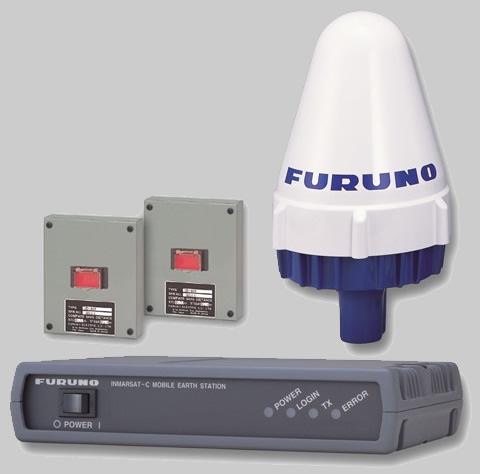
Furuno FELCOM 16 Inmarsat-C Terminal – Complete Technical Guide for Marine Satellite Communications
Product Identification
Manufacturer: Furuno Electric Co., Ltd.
Country of Origin: Japan
Product Type: Inmarsat-C Mobile Earth Station (MES)
Marine Application:
- GMDSS Communications
- SafetyNET Reception
- Fleet Communications
- Distress Alerting
- Ship Position Reporting
- Email & Text Messaging
- LRIT Support
- Maritime Safety Information (MSI)
Product Introduction
Reliable communication is one of the most critical requirements aboard any commercial vessel. Even when ships operate thousands of miles from shore, they must remain capable of sending distress alerts, receiving navigational warnings, and communicating with shore authorities.
The Furuno FELCOM 16 is a compact Inmarsat-C satellite communication terminal designed specifically for maritime operations. It provides worldwide satellite communication coverage through the Inmarsat network and supports numerous GMDSS requirements.
The system became one of the most widely installed Inmarsat-C terminals on merchant vessels, tankers, bulk carriers, offshore vessels, and government ships worldwide.
Furuno FELCOM 16 System Overview


What Is the Furuno FELCOM 16?
The Furuno FELCOM 16 is a satellite communication terminal that operates through the Inmarsat-C network.
Unlike voice communication systems, Inmarsat-C primarily handles:
- Distress Alerts
- Text Messaging
- Email Communications
- Telex Services
- SafetyNET Broadcast Reception
- Position Reporting
- Data Transmission
The equipment continuously communicates with Inmarsat satellites, allowing ships to maintain communication almost anywhere in the world.
Typical Shipboard Installation


Main Features
Global Satellite Coverage
Provides communication through the Inmarsat satellite network.
GMDSS Compliance
Supports mandatory GMDSS communication requirements for SOLAS vessels.
Distress Alert Function
Allows emergency distress messages to be transmitted to rescue coordination centers.
SafetyNET Reception
Receives Maritime Safety Information (MSI) including:
- Weather Warnings
- Navigational Warnings
- SAR Information
- Piracy Alerts
- Ice Reports
Store-and-Forward Messaging
Messages are securely transmitted through satellite networks.
Position Reporting
Supports automatic vessel position reporting.
Compact System Architecture
Designed with minimal installation requirements.
Reliable Operation
Built specifically for continuous marine service.
System Components


Main Components
Antenna Unit
The satellite antenna receives and transmits signals to Inmarsat satellites.
Communication Unit
Processes incoming and outgoing satellite communications.
Terminal Interface
Provides operator access to messages and system functions.
Distress Alert Unit
Dedicated emergency alert transmission capability.
GPS Interface
Provides position information to the communication system.
Power Supply Unit
Provides stable operating voltage.
Data Interface Modules
Allow integration with navigation and monitoring systems.
Applications Onboard Ships
GMDSS Operations
Mandatory communication equipment for SOLAS vessels.
Maritime Safety Information
Reception of:
- NAVAREA Warnings
- Meteorological Warnings
- Search & Rescue Information
Fleet Management
Communication with company headquarters.
Position Monitoring
Regular reporting of vessel position.
Emergency Communications
Distress and urgency message transmission.
Long Range Identification and Tracking (LRIT)
Supports international vessel tracking requirements.
Satellite Communication Network


Common Problems & Troubleshooting
No Satellite Connection
Possible Causes
- Antenna obstruction
- Damaged RF cable
- Antenna failure
- Satellite acquisition problem
Troubleshooting
- Check antenna visibility
- Inspect cable connections
- Verify antenna status indicators
- Restart communication unit
Distress Alert Failure
Possible Causes
- Incorrect MMSI
- GPS position unavailable
- Communication fault
Troubleshooting
- Verify vessel data
- Check GPS input
- Inspect distress panel wiring
Unable to Receive SafetyNET Messages
Possible Causes
- Incorrect NAVAREA selection
- Reception settings error
Troubleshooting
- Check EGC configuration
- Verify satellite coverage
- Review message filter settings
Position Reports Not Updating
Possible Causes
- GPS failure
- NMEA communication loss
Troubleshooting
- Verify GPS operation
- Inspect NMEA interfaces
- Check data configuration
Printer or Message Output Failure
Possible Causes
- Printer malfunction
- Interface problem
Troubleshooting
- Check printer status
- Verify communication ports
- Inspect message settings
Maintenance Tips
Daily Checks
- Verify terminal status.
- Confirm satellite lock.
- Check SafetyNET reception.
Weekly Checks
- Review message logs.
- Verify GPS position input.
Monthly Checks
- Inspect antenna cables.
- Check connectors for corrosion.
Quarterly Checks
- Verify distress alert system operation.
- Perform communication tests.
Annual Maintenance
- Full GMDSS survey inspection.
- Antenna integrity verification.
- Software and configuration review.
Why Ships Still Use the Furuno FELCOM 16
Although newer satellite systems are available today, many vessels continue to operate the FELCOM 16 because of:
- Proven reliability
- Global Inmarsat coverage
- SOLAS compliance
- Simple operation
- Long service life
- Low maintenance requirements
- Strong Furuno support network
Thousands of vessels worldwide still rely on FELCOM series terminals for essential satellite communication services.
Frequently Asked Questions (FAQ)
What is the Furuno FELCOM 16 used for?
It is an Inmarsat-C satellite communication terminal used for GMDSS, SafetyNET, messaging, and distress communications.
Does FELCOM 16 support GMDSS requirements?
Yes. It was designed specifically for maritime GMDSS operations.
Can it receive SafetyNET broadcasts?
Yes. It supports Enhanced Group Call (EGC) SafetyNET reception.
Does the system require GPS input?
Yes. GPS position information is required for several functions including distress alerting.
Is the FELCOM 16 still used onboard ships?
Yes. Many commercial vessels continue operating FELCOM 16 systems worldwide.
Short Product Description
The Furuno FELCOM 16 is a professional Inmarsat-C satellite communication terminal designed for GMDSS operations, SafetyNET reception, distress alerting, vessel tracking, and worldwide maritime communication. Its proven reliability and global satellite coverage have made it one of the most trusted marine communication systems ever installed aboard commercial vessels.
SM MARINE SERVICE™
Marine Automation & Navigation Equipment Supplier
Available Condition:
• New Equipment
• Used Equipment
• Refurbished Equipment
• Reconditioned Equipment
Stock Location:
• Bangladesh
• China
Services:
• Worldwide Shipping
• Technical Support
• Spare Parts Supply
• Marine Equipment Sourcing
Contact Information
SM MARINE SERVICE™
Samir Market, DT Road, Pahartali, beside CDA Market, Chattogram, Bangladesh
Mobile / WhatsApp / Viber: +88 01818 929292
Email: info@smmarineservice.com
Website: www.smmarineservice.com