JRC JLN-740N Doppler Log – Complete Technical Guide, Operation, Maintenance & Troubleshooting
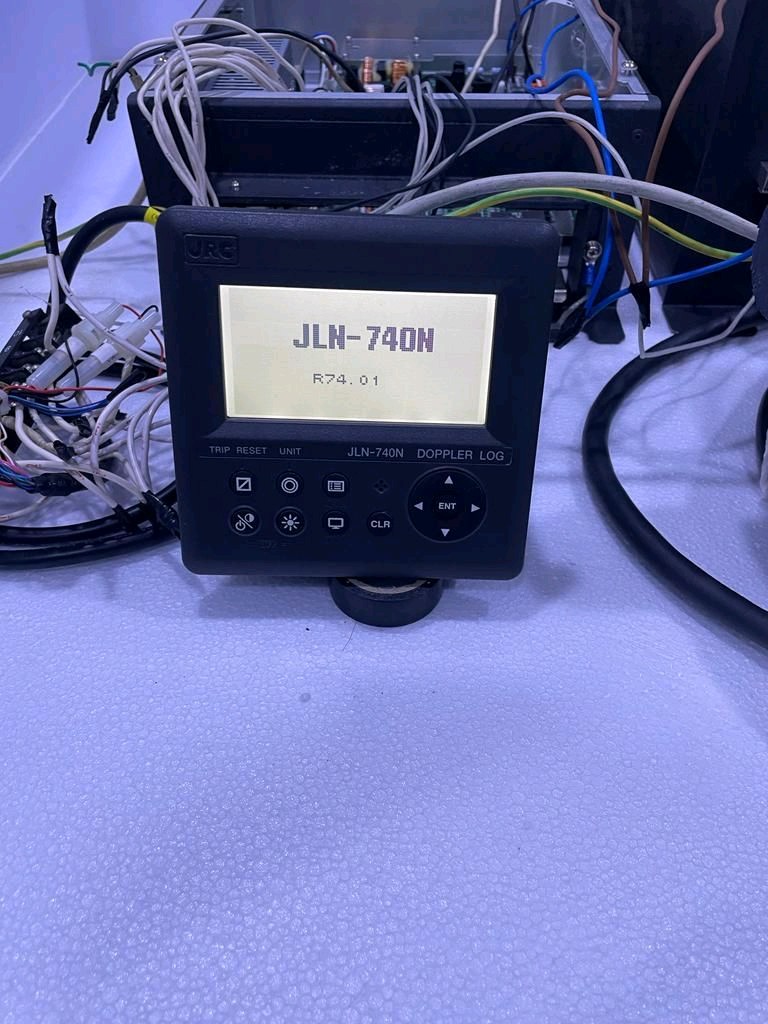
JRC JLN-740N Doppler Log
Complete Marine Technical Guide for Accurate Vessel Speed Measurement
Product Identification
| Item | Details |
|---|---|
| Manufacturer | Japan Radio Co., Ltd. (JRC) |
| Country of Origin | Japan |
| Product Type | Doppler Speed Log |
| Model | JLN-740N |
| Technology | Ultrasonic Doppler Measurement |
| Marine Application | Speed Through Water (STW) & Distance Measurement |
| Installation | Bridge Console & Hull-Mounted Transducer |
| Interface | NMEA 0183 / IEC Navigation Interfaces |
| Compliance | IMO / SOLAS Navigation Standards |
The JRC JLN-740N Doppler Log is an advanced marine navigation instrument designed to provide accurate vessel speed and distance information using Doppler ultrasonic technology. It measures Speed Through Water (STW) and supplies essential navigation data to ECDIS, AIS, Radar, Autopilot, VDR, and Integrated Bridge Systems (IBS).
Product Introduction
Accurate vessel speed information is critical for safe navigation, route monitoring, collision avoidance, and voyage optimization. The JRC JLN-740N was developed as a modern Doppler speed log solution capable of delivering highly reliable speed data under various sea conditions.
The system utilizes ultrasonic signals transmitted from a hull-mounted transducer. By measuring the Doppler frequency shift of reflected signals, the JLN-740N calculates vessel speed relative to the surrounding water.
The equipment is commonly installed aboard:
- Container Ships
- Oil Tankers
- Chemical Tankers
- Bulk Carriers
- LNG/LPG Carriers
- Offshore Support Vessels
- Passenger Ships
- Naval Vessels
Main Product Image


The image above shows the JRC JLN-740N display unit, which provides real-time speed, distance, and operational information to bridge personnel.
What Is a Doppler Log?
A Doppler Log is a marine navigation instrument that measures vessel speed using the Doppler Effect.
The system emits ultrasonic signals into the water beneath the vessel. When these signals reflect from suspended particles or the seabed, the frequency shift is measured and converted into speed information.
Unlike GPS-based speed measurement, a Doppler Log provides:
- Speed Through Water (STW)
- Distance Run
- Longitudinal Speed
- Transverse Speed (depending on configuration)
This information is vital for accurate navigation and vessel maneuvering.
Doppler Measurement Principle


Main Features
High Accuracy Speed Measurement
Provides precise Speed Through Water information.
Ultrasonic Doppler Technology
Utilizes proven Doppler signal processing for reliable measurements.
Distance Counter
Automatically calculates cumulative distance traveled.
Digital Display Unit
Provides clear and user-friendly navigation data.
Self-Diagnostic Functions
Continuously monitors system performance and operational status.
Multiple Interface Outputs
Supports integration with:
- ECDIS
- Radar
- AIS
- VDR
- Autopilot
- Integrated Bridge Systems
Compact Bridge Installation
Designed for easy installation on modern navigation consoles.
IMO-Compliant Navigation Equipment
Suitable for SOLAS-regulated vessels.
Display & Operator Interface

Main Components
1. Display Unit
Located on the bridge.
Functions
- Speed Display
- Distance Monitoring
- Alarm Display
- System Configuration
2. Signal Processing Unit
Processes ultrasonic signals received from the transducer.
Functions
- Doppler Calculations
- Signal Processing
- Data Output Generation
3. Hull-Mounted Transducer
Installed below the waterline.
Functions
- Ultrasonic Transmission
- Signal Reception
- Speed Measurement
4. Interface Module
Provides communication with onboard navigation systems.
Supports
- ECDIS
- AIS
- Radar
- VDR
- Autopilot
5. Power Supply Module
Provides regulated power to the complete system.
System Components


Marine Applications
The JLN-740N is used for:
Speed Through Water Measurement
Provides accurate navigation speed information.
Voyage Monitoring
Supports route monitoring and voyage optimization.
ECDIS Integration
Supplies speed data for electronic navigation systems.
Autopilot Support
Improves steering system performance.
Dynamic Positioning Support
Provides vessel motion information.
Collision Avoidance
Enhances navigational awareness.
Voyage Data Recording
Supplies speed data to VDR systems.
Common Problems & Troubleshooting
1. No Speed Indication
Possible Causes
- Transducer failure
- Power supply issue
- Signal processor fault
Corrective Actions
- Verify power supply
- Inspect transducer connections
- Check processor status
2. Unstable Speed Reading
Possible Causes
- Air bubbles beneath hull
- Excessive turbulence
- Marine growth on transducer
Solution
- Inspect transducer location
- Clean transducer face
- Verify installation condition
3. Incorrect Speed Display
Causes
- Calibration issue
- Sensor fault
- Signal interference
Solution
- Verify calibration settings
- Check signal processor
- Inspect communication wiring
4. Communication Failure
Symptoms
- No speed data on ECDIS
- AIS or Radar not receiving speed input
Solution
- Verify NMEA outputs
- Check communication ports
- Inspect interface cables
5. Distance Counter Not Updating
Causes
- Processor fault
- Software issue
- Configuration problem
Solution
- Restart system
- Verify configuration settings
- Check processor diagnostics
Maintenance Tips
Proper maintenance ensures long-term operational reliability.
Daily Checks
- Verify speed indication
- Review alarm status
- Confirm display operation
Weekly Checks
- Inspect interface connections
- Verify communication outputs
- Review system diagnostics
Monthly Checks
- Verify calibration values
- Test navigation interfaces
- Inspect system logs
Dry Dock Maintenance
During dry dock periods:
- Clean transducer face
- Inspect transducer housing
- Verify mounting integrity
- Check cable condition
Annual Maintenance
Recommended:
- Functional testing
- Calibration verification
- Interface testing
- Performance diagnostics
Why Ships Still Use Doppler Logs
Despite the availability of GPS speed information, Doppler Logs remain essential because they provide:
Speed Through Water (STW)
Critical for navigation calculations.
Independent Speed Source
Provides redundancy during GPS failures.
Improved Autopilot Performance
Supports more accurate steering control.
Better Maneuvering Accuracy
Important during docking and restricted-water navigation.
SOLAS Compliance
Required aboard many commercial vessels.
Frequently Asked Questions (FAQ)
What does the JRC JLN-740N measure?
It measures vessel Speed Through Water (STW) and distance traveled using Doppler ultrasonic technology.
Is it different from GPS speed?
Yes. GPS measures Speed Over Ground (SOG), while the JLN-740N measures Speed Through Water (STW).
Can the JLN-740N connect to ECDIS?
Yes. The system provides navigation data outputs compatible with ECDIS and Integrated Bridge Systems.
What happens if the transducer becomes fouled?
Speed accuracy may decrease and unstable readings may occur.
Is calibration required?
Yes. Periodic verification and calibration checks are recommended during maintenance periods.
Short Product Description
The JRC JLN-740N Doppler Log is a professional marine speed measurement system designed to provide accurate Speed Through Water and distance information using advanced Doppler ultrasonic technology. Featuring digital displays, self-diagnostics, navigation system integration, and reliable performance, it is widely used aboard commercial and offshore vessels worldwide.
SM MARINE SERVICE™
Marine Automation & Navigation Equipment Supplier
Available Condition:
• New Equipment • Used Equipment • Refurbished Equipment • Reconditioned Equipment
Stock Location:
• Bangladesh • China
Services:
• Worldwide Shipping • Technical Support • Spare Parts Supply • Marine Equipment Sourcing
Contact Information
SM MARINE SERVICE™
Samir Market, DT Road, Pahartali, beside CDA Market, Chattogram, Bangladesh
Mobile / WhatsApp / Viber: +88 01818 929292
Email: info@smmarineservice.com
Website: www.smmarineservice.com
User Manual & Technical Resources
Product Manual
Download PDF Click Here