John Lilley & Gillie SR4 Magnetic Compass – Complete Technical Guide, Features, Applications, Maintenance & Troubleshooting
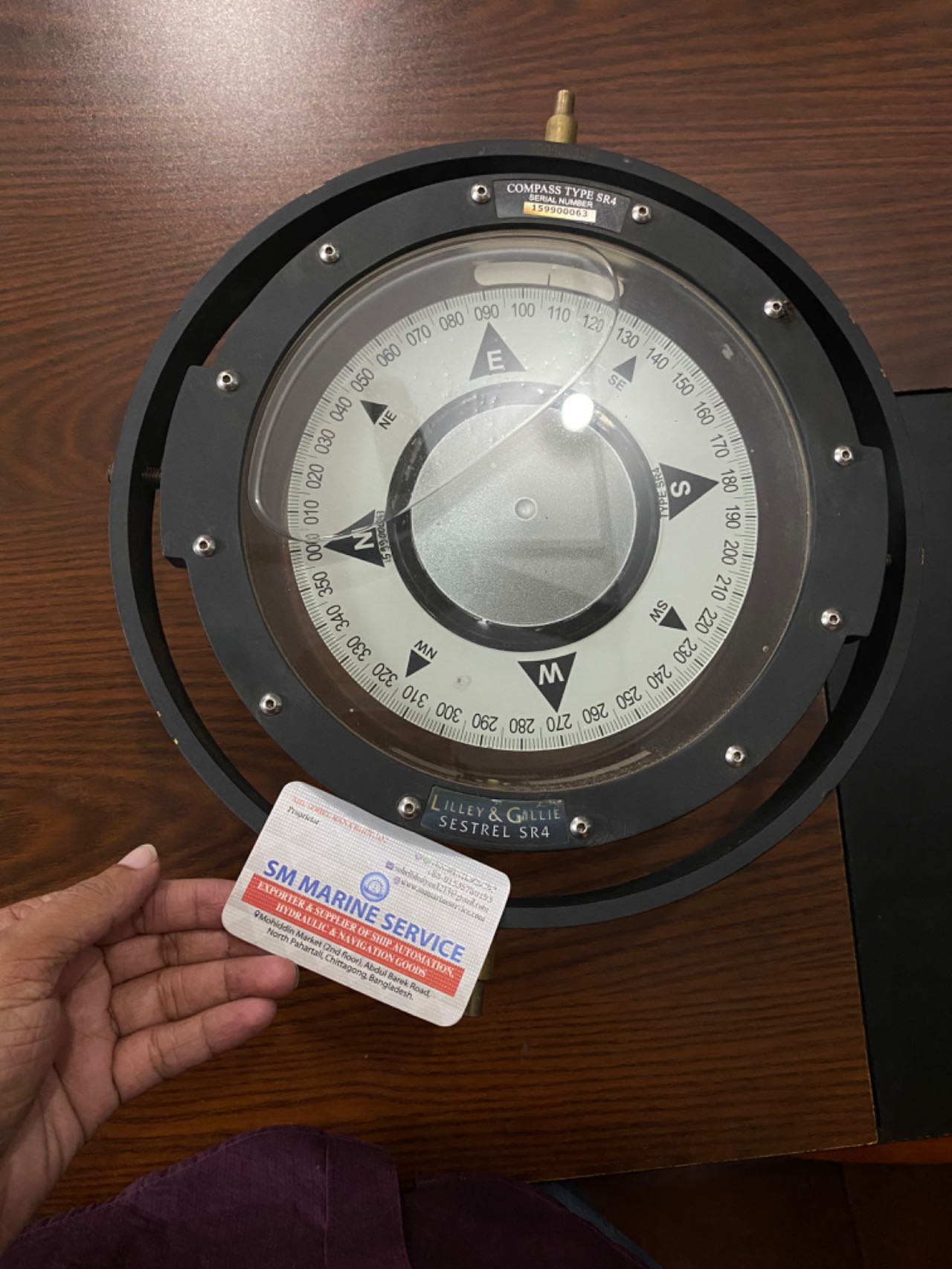
John Lilley & Gillie SR4 Magnetic Compass – Complete Marine Technical Guide
Product Identification
Manufacturer: John Lilley & Gillie Ltd.
Country of Origin: United Kingdom
Product Type: Marine Magnetic Compass
Model: Sestrel SR4
Marine Application: Primary Navigation Reference, Emergency Navigation, Lifeboat Navigation, Small Vessel Navigation, Compass Repeater Reference
Product Introduction
The John Lilley & Gillie Sestrel SR4 Magnetic Compass is one of the most recognized marine magnetic compasses used throughout the maritime industry. Manufactured in the United Kingdom, the SR4 has earned a reputation for reliability, simplicity, and long operational life.
Unlike electronic navigation systems, a magnetic compass operates without external power and remains one of the most dependable navigation instruments onboard ships and marine craft.
The SR4 is widely installed on:
- Merchant Ships
- Fishing Vessels
- Lifeboats
- Pilot Boats
- Workboats
- Naval Craft
- Offshore Vessels
- Training Vessels
John Lilley & Gillie SR4 Magnetic Compass


What Is the John Lilley & Gillie SR4 Compass?
The SR4 is a traditional magnetic compass that uses the Earth's magnetic field to indicate direction.
Unlike GPS, Gyro Compass, or satellite navigation systems, the SR4 requires:
- No electricity
- No software
- No satellite connection
- No network connection
As long as the Earth's magnetic field exists, the compass can provide directional information.
This makes it one of the most important emergency navigation instruments carried onboard vessels.
How Does a Magnetic Compass Work?
A magnetic compass works through a magnetized compass card suspended within a liquid-filled bowl.
Operating Principle
- Magnetized elements align with Earth's magnetic field.
- The compass card rotates freely.
- The lubber line indicates vessel heading.
- Navigators read the ship's direction from the compass card.
Because it operates independently of electrical systems, it remains available even during complete vessel power failures.
Typical Compass Installation


Main Features
Power-Free Operation
No electrical power required.
Reliable Navigation Reference
Provides heading information at all times.
Long Service Life
Many units remain operational for decades.
Compact Design
Suitable for numerous vessel types.
Marine Approved Construction
Designed for harsh marine environments.
Corrosion Resistant Components
Built for long-term shipboard use.
High Visibility Compass Card
Easy heading interpretation.
Emergency Navigation Capability
Functions during total electrical blackout situations.
Main Components
Compass Bowl
Contains compass fluid and compass card.
Compass Card
Displays heading information.
Magnetic Elements
Provide alignment with Earth's magnetic field.
Lubber Line
Reference line for heading indication.
Gimbal Ring Assembly
Allows stable operation during vessel movement.
Protective Housing
Protects internal components from damage.
Internal Compass Components


Applications
The SR4 is commonly used on:
Lifeboats
Emergency navigation during abandon ship situations.
Rescue Boats
Independent heading reference.
Fishing Vessels
Coastal and offshore navigation.
Workboats
Daily navigation operations.
Training Vessels
Navigation education.
Pilot Boats
Harbor navigation.
Merchant Ships
Backup navigation reference.
Naval Craft
Emergency heading information.
Common Problems & Troubleshooting
Air Bubble Inside Compass
Possible Causes
- Fluid leakage
- Temperature variation
Solution
- Inspect fluid level
- Service compass bowl
Compass Card Sticking
Possible Causes
- Mechanical contamination
- Internal damage
Solution
- Clean and inspect assembly
- Replace damaged components
Fluid Discoloration
Possible Causes
- Aging fluid
- Internal contamination
Solution
- Replace compass fluid
- Service unit
Poor Heading Accuracy
Possible Causes
- Nearby magnetic interference
- Damaged magnetic system
Solution
- Remove magnetic sources
- Conduct compass adjustment
Cracked Compass Dome
Possible Causes
- Mechanical impact
- Aging material
Solution
- Replace dome assembly
Maintenance Tips
Daily
- Verify readability.
- Check heading indication.
Weekly
- Inspect for fluid leakage.
- Check dome condition.
Monthly
- Inspect gimbal movement.
- Verify compass card stability.
Annual
- Compass adjustment check.
- Fluid inspection.
- Full operational inspection.
Dry Dock
- Verify mounting condition.
- Check magnetic correction arrangement.
Why Ships Still Use Magnetic Compasses
Even in the age of ECDIS, GPS, AIS, and Gyro Compasses, magnetic compasses remain essential because:
- They require no power.
- They operate independently.
- They provide emergency navigation capability.
- SOLAS regulations require magnetic compass carriage on many vessels.
- They serve as backup heading references.
For this reason, every professional navigator continues to rely on magnetic compasses as a critical safety device.
Frequently Asked Questions (FAQ)
What is the SR4 Compass used for?
The SR4 provides magnetic heading information for navigation.
Does it require electricity?
No. It operates entirely from Earth's magnetic field.
Is it suitable for lifeboats?
Yes. The SR4 is commonly installed on lifeboats and rescue boats.
Can it replace a gyro compass?
No. It serves as a backup and independent heading reference.
Why is a magnetic compass still important?
Because it remains operational even during complete electrical failure.
Short Product Description
The John Lilley & Gillie Sestrel SR4 Magnetic Compass is a reliable marine navigation instrument designed to provide accurate heading information without requiring electrical power. Widely used on merchant ships, lifeboats, pilot boats, and offshore vessels, the SR4 remains one of the most trusted emergency navigation devices in the maritime industry.