Yokogawa EML-500 Speed Log – Complete Technical Guide, Features, Applications, Troubleshooting & Maintenance
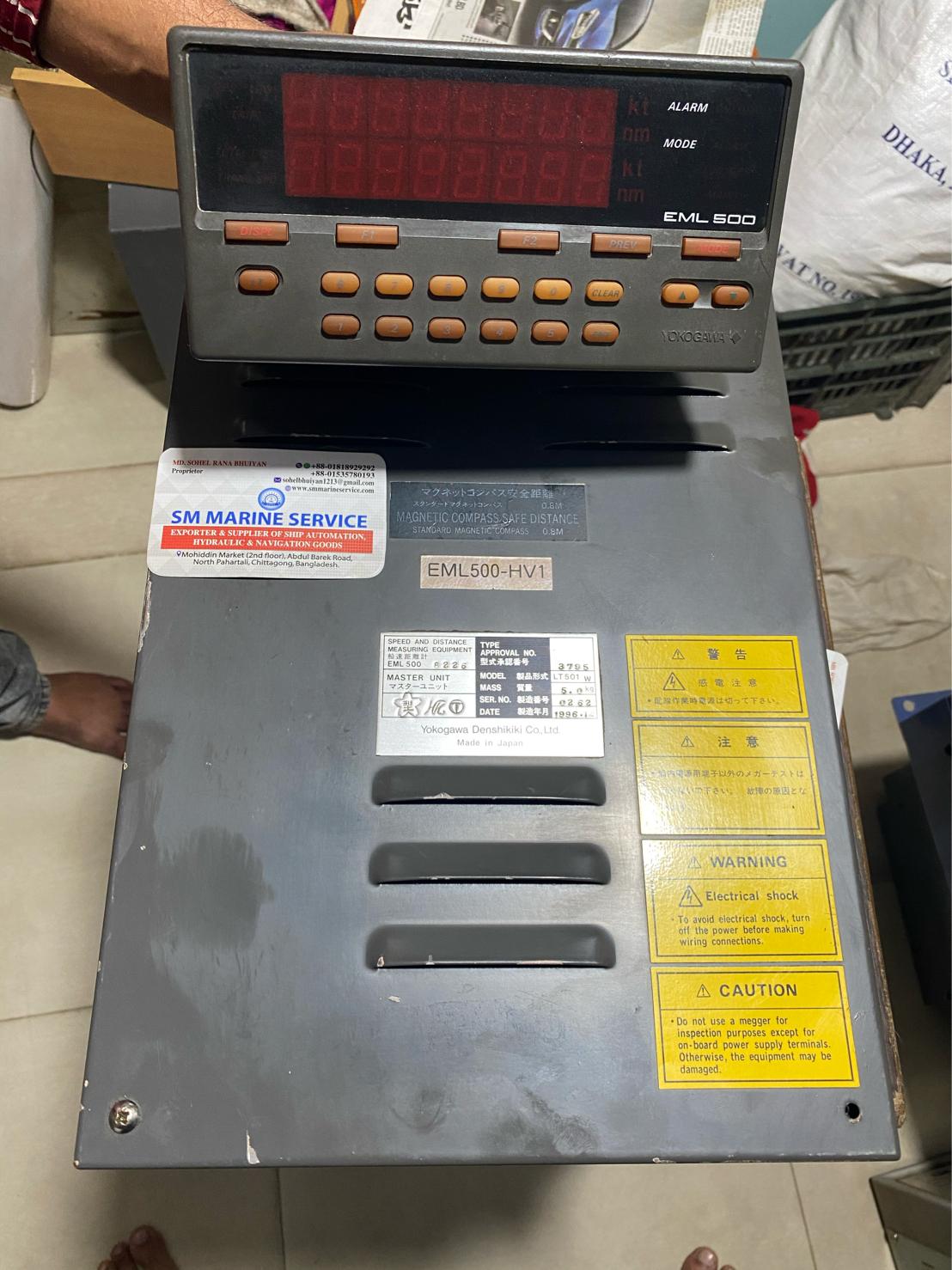
Yokogawa EML-500 Speed Log
Complete Marine Technical Guide for Navigation Professionals
Manufacturer
Yokogawa Denshikiki Co., Ltd.
Country of Origin
Japan
Product Type
Marine Electromagnetic Speed Log System
Marine Application
Ship Speed Measurement, Distance Recording, Navigation Data Distribution, ECDIS Integration, AIS Input, VDR Recording, Bridge Navigation Systems
Product Introduction
The Yokogawa EML-500 Speed Log is a highly reliable marine speed and distance measuring system designed for commercial vessels operating worldwide. The system continuously measures vessel speed through water and calculates travelled distance, providing essential navigation data to bridge equipment and integrated navigation systems.
For decades, Yokogawa navigation products have been trusted aboard:
- Tankers
- Bulk Carriers
- Container Ships
- Offshore Support Vessels
- LNG Carriers
- Passenger Vessels
- Research Ships
The EML-500 became particularly popular because of its reliability, accuracy, and seamless integration with modern bridge systems.
Main Equipment
(Insert Your Original Product Image Here)
The image above shows the Yokogawa EML-500 Speed Log Master Unit available from SM MARINE SERVICE™.
What Is a Marine Speed Log?
A marine speed log is an instrument used to determine:
- Ship Speed Through Water (STW)
- Distance Travelled
- Navigation Performance
- Voyage Data Recording Inputs
Unlike GPS speed, which measures speed over ground (SOG), the speed log provides direct water-referenced speed information, which remains essential for safe navigation and ship maneuvering.
Yokogawa EML-500 System Components


How the Yokogawa EML-500 Works
The EML-500 utilizes electromagnetic measurement technology.
Electromagnetic Principle
The system generates a magnetic field around the transducer.
As seawater passes through this magnetic field, a voltage is generated proportional to vessel speed.
The electronics process this signal and calculate:
- Ship Speed
- Distance Run
- Navigation Data Output
Continuous Monitoring
The system continuously updates:
- Speed Through Water
- Total Distance
- Voyage Distance
- Navigation Data Outputs
This information is distributed to navigation systems throughout the vessel.
Typical Shipboard Installation


Main Features
Accurate Speed Measurement
Provides reliable vessel speed information under varying sea conditions.
Distance Recording
Calculates total and voyage-specific distance travelled.
Navigation System Integration
Interfaces with:
- ECDIS
- AIS
- VDR
- Radar
- Autopilot
- Integrated Bridge Systems
Continuous Data Output
Real-time speed information is available for navigation decisions.
Rugged Marine Design
Built to withstand harsh shipboard environments.
Long Operational Life
Many EML-500 systems remain operational after decades of service.
Low Maintenance Requirements
Simple design reduces maintenance workload.
Main Components
A complete Yokogawa EML-500 installation generally consists of:
Master Display Unit
Bridge-mounted operator interface.
Signal Processing Unit
Processes speed measurement signals.
Electromagnetic Transducer
Installed below the vessel hull.
Power Supply Unit
Provides stable operating voltage.
Interface Modules
Transmit data to connected systems.
Communication Outputs
Supports navigation equipment integration.
Display & Control Units

Marine Applications
The EML-500 is commonly used for:
Navigation Operations
Provides accurate speed information to navigation officers.
ECDIS Integration
Supports route monitoring and voyage planning.
AIS Data Input
Provides vessel speed information.
Voyage Data Recording
Records speed data for voyage analysis.
Fuel Efficiency Monitoring
Assists operators in optimizing vessel performance.
Harbor Maneuvering
Supports precise vessel handling.
Offshore Operations
Provides reliable speed references during offshore activities.
Common Problems & Troubleshooting
No Speed Indication
Possible Causes:
- Transducer Failure
- Power Supply Fault
- Signal Cable Damage
Solutions:
- Verify Power Supply
- Inspect Transducer Connections
- Check Input Signals
Unstable Speed Reading
Possible Causes:
- Marine Growth on Sensor
- Damaged Transducer
- Electrical Noise
Solutions:
- Clean Sensor Surface
- Verify Shielded Cabling
- Inspect Transducer Condition
Incorrect Distance Calculation
Possible Causes:
- Calibration Error
- Processing Unit Fault
- Sensor Problems
Solutions:
- Verify Calibration Parameters
- Perform System Diagnostics
Communication Failure
Possible Causes:
- Interface Card Problems
- Wiring Faults
- Port Configuration Errors
Solutions:
- Inspect Output Connections
- Verify Communication Settings
Alarm Indications
Possible Causes:
- Sensor Failure
- Signal Loss
- Power Issues
Solutions:
- Review Alarm Codes
- Check Sensor Inputs
- Verify System Voltage
Maintenance Tips
To maximize system reliability:
Monthly Checks
- Verify Display Accuracy
- Check Alarm Functions
- Inspect Wiring
Quarterly Maintenance
- Test Output Signals
- Verify Distance Calculation
- Inspect Interface Connections
Annual Maintenance
- Clean Transducer Area
- Check Hull Penetration
- Verify Calibration
- Test Data Outputs
Dry Dock Maintenance
- Inspect Sensor Condition
- Remove Marine Growth
- Check Sealing Components
Proper preventive maintenance greatly extends equipment lifespan.
Speed Log Sensors & Marine Applications


Why Ships Still Use Speed Logs
Although GPS provides Speed Over Ground (SOG), speed logs remain essential because:
- GPS Cannot Measure Speed Through Water
- Autopilot Systems Require Accurate Inputs
- ECDIS Benefits From Water Speed Data
- Fuel Optimization Requires Speed Analysis
- Harbor Maneuvering Depends on Accurate Speed Information
- Regulatory Requirements Still Support Log Data Usage
As a result, speed logs remain a critical part of modern bridge navigation systems.
Frequently Asked Questions (FAQ)
What is the Yokogawa EML-500?
It is an electromagnetic marine speed log used for measuring vessel speed through water and travelled distance.
What does the EML-500 measure?
The system measures:
- Speed Through Water (STW)
- Distance Travelled
- Navigation Speed Data
Is it compatible with ECDIS?
Yes. The EML-500 can provide speed information to ECDIS systems.
Can it interface with VDR systems?
Yes. Speed data is commonly recorded by Voyage Data Recorders.
Why is Speed Through Water important?
It helps navigation officers understand vessel performance independent of current and tidal influences.
Short Product Description
The Yokogawa EML-500 Speed Log is a professional marine speed measurement system designed to provide accurate vessel speed-through-water and distance information. Widely used aboard commercial vessels worldwide, it supports ECDIS, AIS, VDR, radar, and integrated navigation systems while delivering reliable long-term performance.
SM MARINE SERVICE™
Marine Automation & Navigation Equipment Supplier
Available Condition:
• New Equipment
• Used Equipment
• Refurbished Equipment
• Reconditioned Equipment
Stock Location:
• Bangladesh
• China
Services:
• Worldwide Shipping
• Technical Support
• Spare Parts Supply
• Marine Equipment Sourcing
Contact Information
SM MARINE SERVICE™
Samir Market, DT Road, Pahartali, beside CDA Market, Chattogram, Bangladesh
Mobile / WhatsApp / Viber: +88 01818 929292
Email: info@smmarineservice.com
Website: www.smmarineservice.com
User Manual & Technical Resources
Product Manual
Download PDF Click Here