JRC JCY-1850 SVDR | Simplified Voyage Data Recorder | Marine Black Box System | SM MARINE SERVICE™
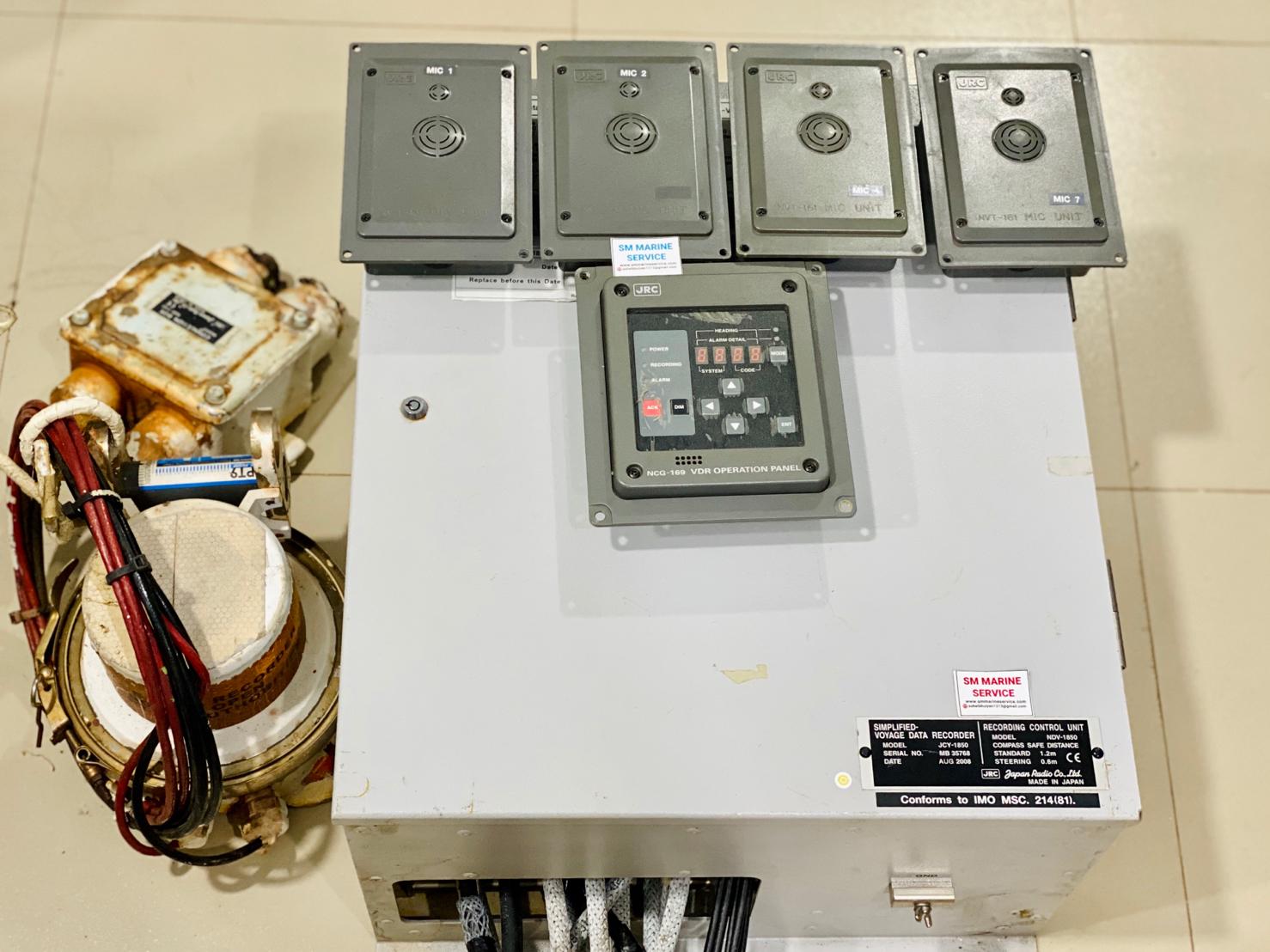
JRC JCY-1850 SIMPLIFIED VOYAGE DATA RECORDER (SVDR)


Manufacturer Information
Manufacturer: Japan Radio Co., Ltd.
Country of Origin: Japan
Equipment Type: Simplified Voyage Data Recorder (SVDR)
Marine Application: Navigation Data Recording, Accident Investigation & IMO Compliance
Product Introduction
The JRC JCY-1850 SVDR (Simplified Voyage Data Recorder) is a professional marine recording system designed to continuously collect and store critical navigational, communication, and operational data from a vessel.
Often referred to as the ship's "Black Box", the SVDR plays a crucial role in maritime safety by preserving essential information that can be used during accident investigations, incident analysis, training, and regulatory inspections.
The JCY-1850 is designed to comply with international maritime regulations and is widely installed onboard:
- Cargo Ships
- Container Vessels
- Bulk Carriers
- Oil Tankers
- Chemical Tankers
- Offshore Vessels
- Passenger Ships
- Government & Naval Vessels


What Is JRC JCY-1850 SVDR?
The JCY-1850 is a marine data recording system that automatically records operational information from various bridge and navigation equipment.
The system continuously stores:
- GPS Position
- Vessel Speed
- Gyro Heading
- Radar Information
- AIS Data
- Bridge Audio
- VHF Communication
- Alarm Status
- ECDIS Data
- Navigation Events
This information is preserved inside a protective recording capsule for future retrieval if required.
Main Features
IMO-Compliant Data Recording
Designed to meet international voyage data recording requirements.
Continuous Data Collection
Records vessel operational information 24 hours a day.
Protective Recording Capsule
Stores critical voyage data in a highly protected memory unit.
Multi-System Integration
Interfaces with:
- GPS
- Gyro Compass
- Radar
- ECDIS
- AIS
- Echo Sounder
- VHF Systems
- Bridge Alarms
Bridge Audio Recording
Captures bridge communications and environmental audio.
Event Logging
Records critical alarms and operational events.
Reliable Marine Construction
Built specifically for long-term marine operation.


Main Components
1. Recording Control Unit (RCU)
The central processing and storage system.
2. Data Acquisition Unit
Collects information from connected bridge equipment.
3. Float-Free Recording Capsule
Protects voyage data during accidents and emergencies.
4. Bridge Microphones
Installed on the bridge to capture operational communications.
5. Operation Panel
Used for monitoring system status and alarms.
6. Interface Modules
Provide communication with navigation equipment.
Applications
The JCY-1850 SVDR is used for:
- Accident Investigation
- Safety Monitoring
- Regulatory Compliance
- Crew Training
- Operational Analysis
- Voyage Monitoring
- Fleet Safety Programs
- Incident Reconstruction
The system is considered one of the most important safety devices onboard modern commercial vessels.


Importance of SVDR Onboard Ships
The Voyage Data Recorder serves the same purpose as an aircraft flight recorder.
In the event of:
- Collision
- Grounding
- Fire
- Machinery Failure
- Navigation Incident
- Environmental Accident
Investigators can retrieve recorded data to understand exactly what occurred.
Without a functioning SVDR:
- Accident Analysis Becomes Difficult
- Regulatory Compliance May Be Affected
- Critical Evidence May Be Lost
- Safety Investigations Become More Challenging
Common Problems & Troubleshooting
Recording Failure Alarm
Possible Causes:
- Storage Device Failure
- Internal Processor Fault
- Communication Error
Solution:
- Verify Recording Status
- Check System Diagnostics
- Inspect Data Storage Module
Microphone Failure
Possible Causes:
- Damaged Microphone
- Cable Fault
- Interface Failure
Solution:
- Verify Audio Input
- Inspect Microphone Wiring
- Replace Defective Unit
No Data From GPS
Possible Causes:
- NMEA Communication Error
- GPS Interface Failure
- Configuration Problem
Solution:
- Verify GPS Output
- Check Interface Ports
- Confirm Communication Settings
Recording Capsule Communication Error
Possible Causes:
- Capsule Cable Damage
- Interface Failure
- Capsule Fault
Solution:
- Inspect Capsule Wiring
- Verify Interface Status
- Perform Capsule Test
Power Supply Alarm
Possible Causes:
- Input Voltage Problem
- Fuse Failure
- Power Module Defect
Solution:
- Verify Incoming Voltage
- Inspect Fuse Condition
- Check Power Supply Module
Maintenance Tips
Marine engineers should regularly inspect:
- Recording Status
- Alarm History
- Bridge Microphones
- Recording Capsule Condition
- GPS Communication
- Radar Input
- AIS Interface
- System Self-Test Results
Proper maintenance improves:
- Data Integrity
- Safety Compliance
- System Reliability
- Equipment Lifespan
Why Ships Still Use JRC JCY-1850 SVDR
The JCY-1850 remains widely used because of:
- IMO Compliance
- Reliable Data Recording
- Rugged Marine Construction
- Long-Term Reliability
- Proven Maritime Performance
- Worldwide Technical Support
Many commercial fleets continue operating JRC SVDR systems due to their proven reliability and regulatory acceptance.
Frequently Asked Questions (FAQ)
What is the purpose of the JCY-1850 SVDR?
The system records navigational and operational data for accident investigation and maritime safety compliance.
What information does the SVDR record?
It records GPS, radar, AIS, bridge audio, alarms, gyro heading, communications, and other voyage-related information.
Is the JCY-1850 IMO compliant?
Yes. It is designed to meet international voyage data recording requirements.
What is the recording capsule used for?
The capsule protects recorded voyage data during emergencies and accidents.
Do you supply refurbished units?
Yes. SM MARINE SERVICE™ can supply New, Used, Refurbished, and Reconditioned units depending on stock availability.
Short Product Description
The JRC JCY-1850 SVDR is a professional Simplified Voyage Data Recorder designed to continuously record critical navigational and operational information onboard commercial vessels. The system supports accident investigation, maritime safety compliance, and operational monitoring through reliable data collection and secure storage.